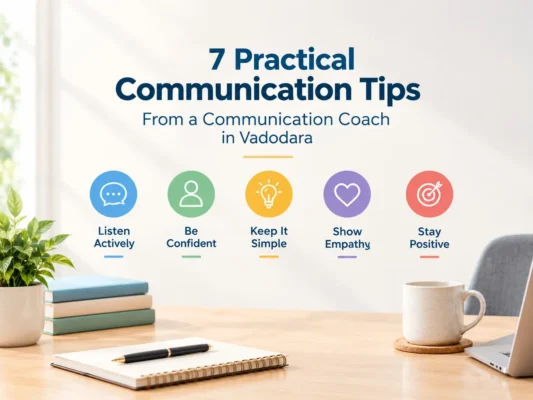
Good communication is an important part of both personal and professional life. Whether you are speaking with clients, attending meetings, giving presentations, working with a team, or having everyday conversations, the way you communicate can influence how clearly your ideas are understood.
Many people think good communication simply means speaking fluent English or using advanced vocabulary. In reality, effective communication involves much more. Listening carefully, choosing the right words, understanding body language, speaking with confidence, and responding appropriately are all important parts of communication.
If you want to improve these skills, guidance from a Communication Coach in Vadodara can help you understand your current communication habits and work on areas that need improvement.
At Ethoscorp Consultancy, communication development can be approached with practical techniques that are relevant to professional and everyday situations. Here are seven useful communication tips you can start applying.
1. Listen Before You Respond
One of the most overlooked communication skills is active listening. Many people start preparing their response while the other person is still speaking. This can lead to misunderstandings and missed information.
Instead, give the speaker your full attention. Avoid interrupting and allow them to finish their point before responding. You can also ask a short question if something is unclear.
For example, instead of immediately giving your opinion, try saying:
“If I understand correctly, you are saying that…”
This shows that you are listening and gives the other person an opportunity to clarify their point.
Active listening can make conversations more productive and help build trust with colleagues, clients, friends, and family members.
2. Keep Your Message Simple and Clear
Good communication does not require complicated words. In many situations, simple and direct language is more effective.
When explaining an idea, think about what the other person actually needs to know. Avoid unnecessary information and long explanations when a shorter message can communicate the same idea.
For example, instead of saying:
“I would like to inform you that we may potentially be able to complete the task sometime during the upcoming week.”
You could simply say:
“We expect to complete the task next week.”
Clear communication reduces confusion and makes it easier for others to understand your message.
A Communication Coach in Vadodara can help you practise structuring your thoughts so that your conversations become more natural and focused.
3. Pay Attention to Body Language
Communication is not only about spoken words. Facial expressions, posture, eye contact, hand movements, and tone of voice can also affect how your message is received.
For example, maintaining comfortable eye contact can show that you are engaged in the conversation. Sitting or standing with an open posture can also help you appear more approachable.
However, body language should feel natural rather than forced. You do not need to constantly think about every movement you make. Start by becoming more aware of how your body responds during different conversations.
Practising in front of a mirror or recording yourself while speaking can help you notice habits that you may not be aware of.
4. Work on Your Tone and Pace
The same words can have different meanings depending on how they are spoken. Speaking too quickly may make it difficult for others to follow you, while speaking too softly may make your message unclear.
Try maintaining a comfortable pace and use short pauses between important points. Pausing can also give you a moment to organise your thoughts.
Your tone should match the situation. A professional meeting, casual conversation, presentation, and difficult discussion may each require a slightly different approach.
If you often feel nervous while speaking, practising your message aloud before an important conversation can help you feel more prepared.
5. Avoid Common Communication Mistakes
Some communication habits can create unnecessary misunderstandings. Common examples include interrupting others, speaking without thinking, using unclear language, checking your phone during conversations, or assuming what another person means without asking.
Another common mistake is focusing too much on winning an argument rather than understanding the issue.
When a conversation becomes difficult, try to slow down and focus on the actual problem. Ask questions, listen to the other person’s perspective, and explain your point calmly.
A communication professional can help identify repeated habits and provide exercises to develop better responses in challenging situations.
6. Build Confidence Through Regular Practice
Communication confidence usually develops through practice rather than overnight.
Start with small situations. Speak up during a team discussion, introduce yourself to someone new, explain an idea to a colleague, or practise a short presentation at home.
You can also record your voice while speaking for a few minutes each day. Listen to the recording and notice your pace, pronunciation, pauses, and clarity.
Do not focus only on mistakes. Notice improvements as well.
For people who feel uncomfortable speaking in groups or professional situations, structured guidance from a Communication Coach in Vadodara can provide regular practice and feedback.
7. Learn to Adapt Your Communication Style
Not everyone communicates in the same way. A conversation with a close friend is different from a conversation with a client, manager, employee, or new acquaintance.
Effective communicators learn to adjust their communication depending on the situation and the person they are speaking with.
For example, a detailed explanation may be useful when training a new employee, while a client may prefer a summary of the key points.
Adapting your communication does not mean changing who you are. It means understanding what will make your message easier for the other person to understand.
Why Communication Coaching Can Be Helpful
Improving communication can be easier when you receive structured feedback. A coach can help you identify areas such as speaking confidence, clarity, listening, presentation skills, professional communication, and interpersonal interaction.
Rather than simply learning communication rules, practical coaching can give you opportunities to practise these skills in realistic situations.
At Ethoscorp Consultancy, communication development can be connected with workplace and professional situations, helping individuals understand how effective communication can support their interactions and career development.
How to Start Improving Your Communication Skills
You do not need to change everything at once. Choose one area and practise it consistently.
For example, start with active listening for one week. During conversations, focus on allowing the other person to finish speaking before responding. In the following week, work on speaking more clearly and slowly.
Small improvements repeated regularly can make communication feel more natural over time.
If you are looking for a Communication Coach in Vadodara, consider what you specifically want to improve before choosing a coaching approach. Your goals may include professional communication, confidence, presentations, interpersonal skills, or everyday conversations.
Conclusion
Effective communication is a skill that can be developed with awareness, practice, and feedback. Listening carefully, keeping your message clear, using appropriate body language, improving your tone, avoiding common mistakes, building confidence, and adapting to different situations can all help you become a more effective communicator.
With consistent practice and the right guidance, communication can become more comfortable and natural. Ethoscorp Consultancy can be considered by individuals looking to develop practical communication skills for professional and workplace situations in Vadodara.
Frequently Asked Questions
1. What does a Communication Coach in Vadodara help with?
A communication coach can help individuals work on areas such as speaking confidence, clarity, listening, presentation skills, professional communication, and interpersonal interaction.
2. Can communication skills be improved with practice?
Yes. Regular practice, feedback, and awareness of communication habits can help improve communication skills over time.
3. Who can benefit from communication coaching?
Students, working professionals, business owners, managers, job seekers, and individuals who want to improve their communication can benefit from structured coaching.
4. How can I become more confident while speaking?
Start with small conversations, practise speaking regularly, record yourself, and gradually take part in situations that require you to express your ideas.
5. Is communication only about speaking English well?
No. Effective communication also includes listening, clarity, body language, tone, confidence, and understanding the other person’s perspective.
6. How can Ethoscorp Consultancy help with communication development?
Ethoscorp Consultancy can provide guidance focused on practical communication and professional interaction, depending on an individual’s learning and development needs